The Blue Mosque, Sultan Ahmet Camii, in Istanbul is one of the top tourist destinations in the city. It’s a beautiful mosque that is well-known for its blue tiles and stunning architecture. If you’re planning on visiting Istanbul, make sure to add the Blue Mosque to your list! In this blog post, we’ll give you a traveler’s guide to the Blue Mosque, including information on how to get there, what to expect, and what you can see inside.
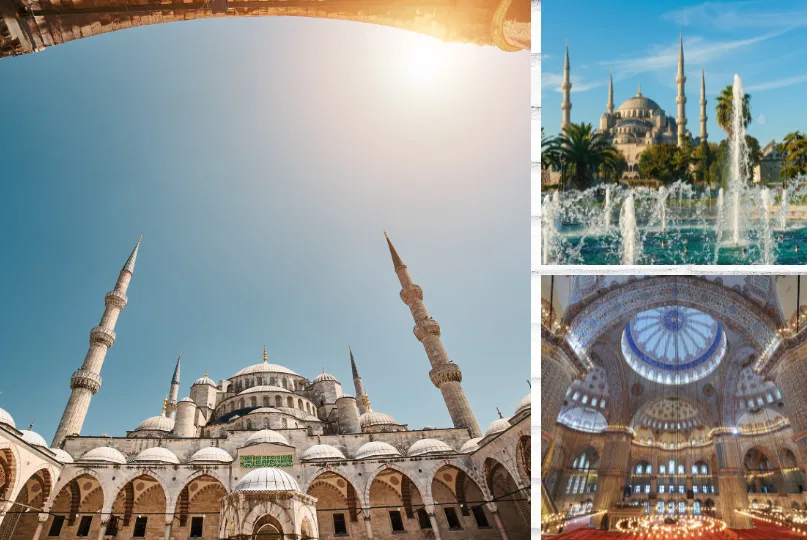
The Blue Mosque, Sultanahmet Camii in Turkish, is one of the finest mosques in Turkey and is located in the city of Istanbul. It was built for Sultan Ahmed I by the famous architect Sedefkar Mehmet Aga in the Ottoman capital city between 1609 and 1616.
Following the Peace of Zsitvatorok and the devastating loss of 1603-18 conflict against Persia, the Sultan Ahmed I made the decision to build an enormous mosque in Istanbul to assert Ottoman power. It was the first imperial mosque in more than 40 years.
Although his predecessors had built their mosques using the war spoils, Ahmed I procured funds from the Treasury since Ahmed I had not won any significant victories.

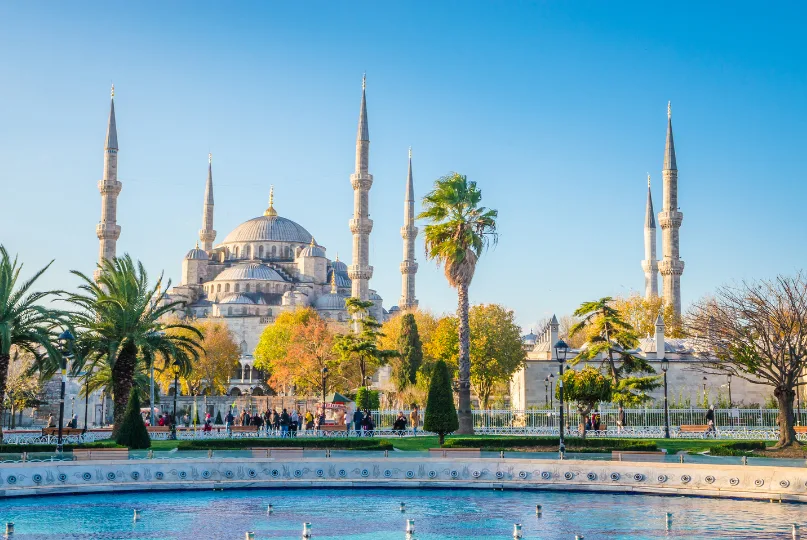
The Sultanahmet Mosque features one central dome rests on four semi domes with the six slender soaring minarets with eight domes secondary to them. Ascending domes are the result over two millennia from imperial Ottoman Mosque architecture.
It is a blend of Byzantine features from the nearby Hagia Sophia with the traditional Islamic architectural style and is believed to be the final great mosque from that traditional period.
Its architect Sedefkar Mehmed Aga was the one who synthesized the concepts of his mentor Sinan and set out to strive for a huge size, grandiosity and grandeur.

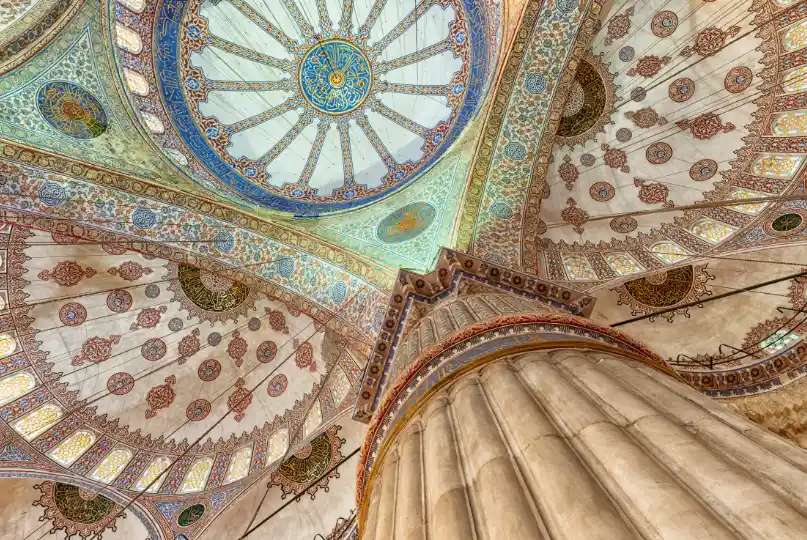
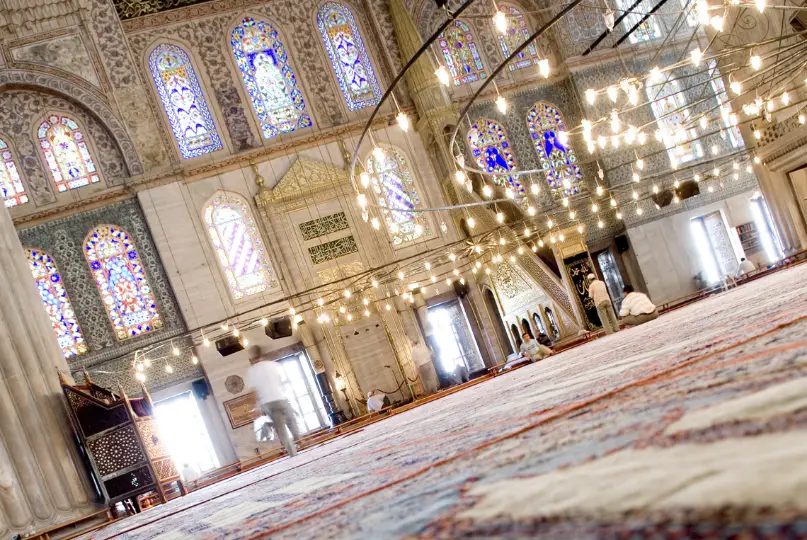
The interior walls of the building below the main dome are decorated with around 20,000 hand-painted glazed iznik tiles with 60 different tulip designs. The large unified prayer hall and thin marble pulpit right next to the carved marble niche are lit with 200 legacy stained glass windows.
The mosque is set in front of an equally spacious courtyard which has an enormous fountain for ablution.
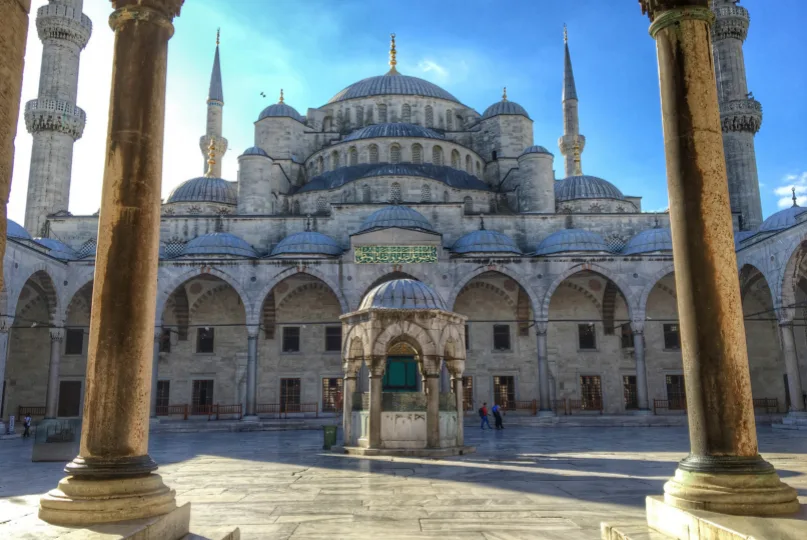
It was built bigger than the earlier imperial mosques between 1609 and 1616 for the Sultan Ahmet I by the architect Sedefkar Mehmed Agha.
Sultan Ahmet I was born on April 18th, 1590 in Manisa. The father of the Sultan was Sultan Mehmet III, his mother was Handan Sultana.
Young Sultan was crowned after the death of his father on the 21st of December, 1603. Sultan Ahmed I was the first ruler to institute administrative rules since Suleyman the Magnificent. Sultan Ahmed was a brilliant politician and, despite being relatively young, he managed the empire with great success.
In the life of Sultan Ahmed, the number 14 was significant. The Sultan was crowned at his 14th year. the reign lasted for 14 years and was the 14th sultan in the Ottoman Empire. He died at 28 due to of the typhus (22nd Nov. 1617).
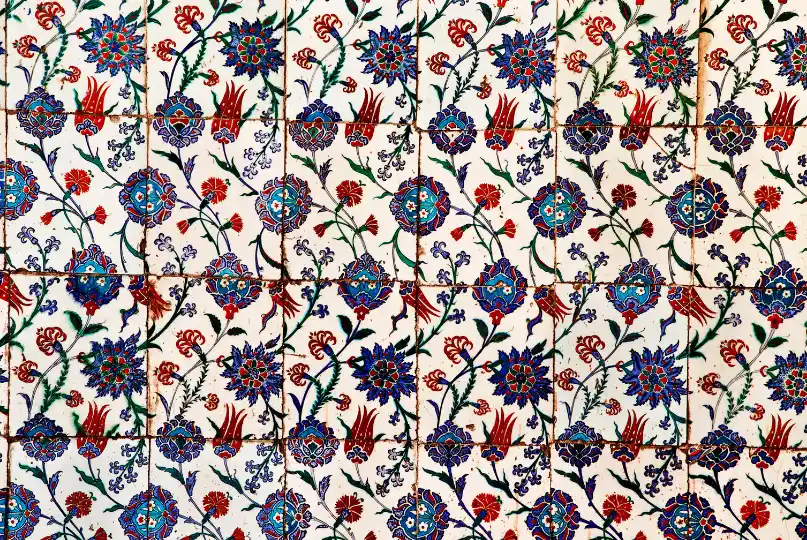
The Sultanahmet Mosque is so named because of the blue coloured tiles that decorate its interior. In reality, the tiles are a shade darker, being more turquoise.
The blue tiles were hand-picked and handcrafted in Nicaea (Iznik), making this mosque one of the most beautiful examples of Ottoman architecture anywhere. Carnations, roses, tulips, and geometrical patterns with white, red, and blue tones are some of the Iznik tiles traditional motifs.

The Sultan Ahmed Mosque, also known as Blue Mosque, is covered with more than 20,000 handcrafted Iznik (Nicean) tiles, which are turquoise-blue in color and have red tulip patterns.
The end walls of the mosque are also covered in blue, with natural light streaming in from the more than 200 stained glass windows on the top levels.
The pencil shaped minarets of the Sultanahmet Mosque, in addition to its interior decoration, are one of the mosque’s unique characteristics. Rather than the usual four minarets for imperial mosques, it has six.
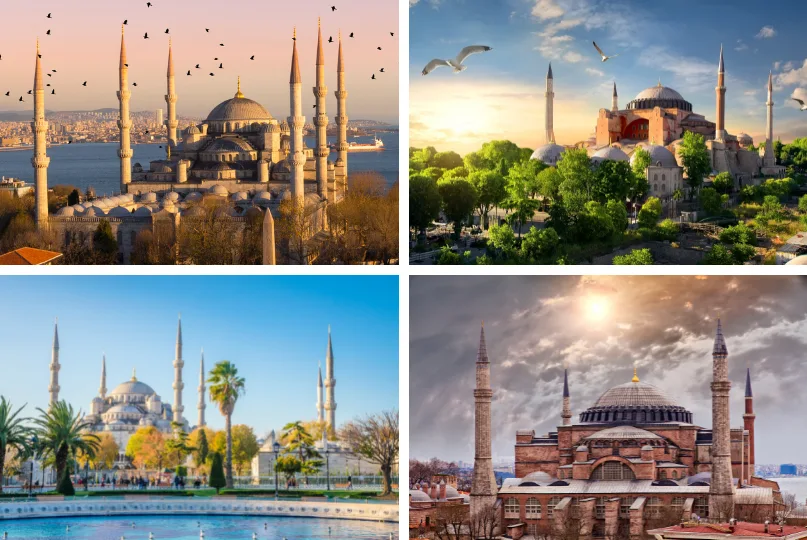
The Blue Mosque is not the same as the Hagia Sophia Mosque, converted christian church. The Blue Mosque was originally a mosque, whereas the Hagia Sophia Mosque was intended to be a church from the start. The Hagia Sophia Mosque is over 1550 years old, whereas the Blue Mosque is relatively recent.
They are near to each other but on opposite sides. The Haghia Sophia Mosque is one of the world’s oldest churches, and it has four minarets. The Blue Mosque has six minarets and a lighter hue when seen from the outside.

A minaret is a tall, thin spire with balconies from which the muezzin summons people to prayer.
Ottoman imperial mosques had four minarets. Depending on the size, they may have two or one minaret if built by other people or families.
The Blue Mosque is one of the most popular mosques and attractions in the world. When it comes to size, it isn’t particularly large.
The mosque has a capacity of 10,000 people. They constructed larger mosques than the Blue Mosque in later times, especially as we enter into the modern age.
Istanbul is a metropolis that straddles both Europe and Asia. The Blue Mosque is located in between the Byzantine hippodrome and Ottoman royal residence Topkapi Palace, on the Europe side.
While the Sultahmed Mosque is one of the top attractions of Istanbul, it does not charge an entrance fee. You never have to pay to enter a working mosque while you’re in Turkey. They are all free, but you must observe certain dress codes.
Ladies and men should dress modestly, with their shoulders covered and extending beyond their knees. Ladies also will be expected to cover their heads. Scarves are provided for both ladies and males at the mosque’s entrance, but feel free to bring your own scarf if you’re wearing shorts.
Great news for travelers and history enthusiasts! The iconic Blue Mosque in Istanbul has recently reopened its doors to visitors in April 2023, following an extensive period of restoration.

The much-awaited renovation of the mosque has come to an end after a three-and-a-half-year journey. The restoration works, originally planned to conclude in 2020, were finally completed in April 2023.
Yes, you can. Now, visitors have the opportunity to witness the mosque’s renewed splendor and appreciate its timeless beauty. Don’t miss the chance to explore this magnificent architectural gem, freshly restored and ready to welcome you with open doors.
The Blue Mosque is generally open to visitors every day from 8:30 am to 4:45 pm, except during prayer times. These prayer times vary throughout the year and are subject to change, so it’s a good idea to check the mosque’s schedule before planning your visit.
The Sultanahmet Mosque opens at 2:30 p.m. on Fridays.
The Sultanahmet Mosque is only open for tourists during the day. Unfortunately, for nighttime visits, it is closed. But you shouldn’t be deterred from capturing night images of the mosque. With the lights on, it looks great.
It is still a working mosque, open for prayers, despite the fact that it is the most frequented mosque in Istanbul. During prayer hours, you will not be allowed to enter the mosque.
If you want to make things simple for yourself, avoid going to the mosque on Fridays, when it is closed for prayer. You should check the closing hours of the mosque for prayers on other days.
When you put all of this together, we recommend visiting the mosque as soon as it opens for visitors in the morning.
The Sultan Ahmed Mosque may be reached in a few minutes on foot from the Sultanahmed neighborhood. For the neighboring areas, the tram is the most convenient public transport option.